

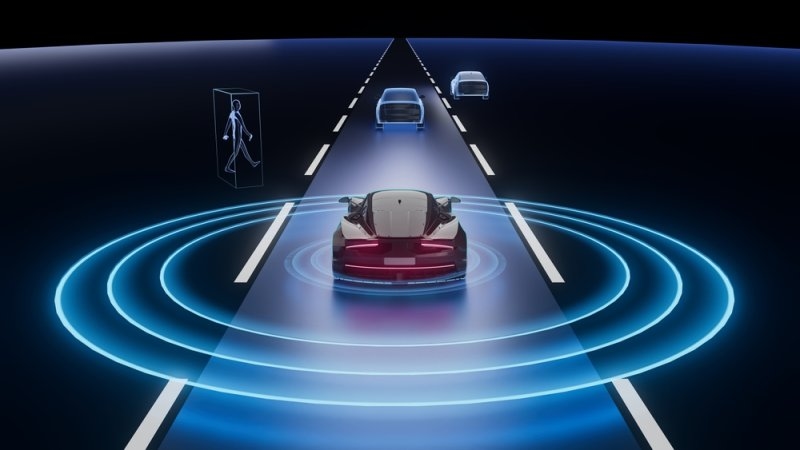
Car-to-car technology, also known as ADAS, relies on sensors, cameras, radar, and software to warn a driver of potential hazards and allow them to act in time to prevent a crash. These systems alert drivers to vehicles in blind spots and can preserve a safe distance between vehicles or brake for a potential collision. They're useful to counter some of the common driving mistakes, such as reacting too slowly and missing hazards.
The actual performance, however, depends on the basis of the condition of the road, the quality of sensors, the design of the vehicle, and the driver's concentration. This blog describes the working of car ADAS technology, what the most important safety features are, and why they help to prevent road crashes.
Electronic systems that enhance safer driving practices are known as Advanced Driver Assistance Systems (ADAS). With ADAS, cars can offer warnings, steer, and help brake and accelerate in certain circumstances.
If a driver approaches a stopped vehicle at an unsafe speed, for instance, forward collision warning can warn the driver. In the case that the driver fails to react in time, automatic emergency braking can kick in and apply the brakes.
This additional answer may count.
The operation of ADAS systems varies with the features fitted in a car. The cameras recognize lane markings and road signs, the radar calculates the distance and relative velocity of surrounding objects, and ultrasonic parking sensors have been instrumental in low-speed parking.
A sensor's type can be synced up to deliver better detection in some instances by combining multiple sensor types. Software calls their input, gauges potential risks, and determines to give a warning to the user or intervene. However, not all situations are correctly interpreted in a vehicle equipped with ADAS technology. Such factors as heavy rain, glaring headlights, dirty sensors, fading lane markings, or an atypical road layout may have an impact.
Don't Miss: Rise of AI in the Automotive Industry & How It Changed Driving?
Frequent types of crash scenarios are the ones that are the focus of the most helpful types of ADAS safety devices—such as risk detection of rear-end collisions, lane leaving, and in-view/hidden risks.
The available types of ADAS differ among car models, manufacturers, and trim levels. There are some that alert, and others that are able to take a fleeting grip on steering or braking.
Each of these ADAS safety systems tackles various risks. AEB can also prevent a collision from happening in a rear collision scenario; blind spot monitoring can improve safety when changing lanes. Neither can be used to ensure avoidance of the accident.
Suppose a car traveling on the highway falls behind the traffic, glances down at a map, and does not see traffic slow down. If the driver doesn't brake, and the system predicts a collision, it could intervene and/or alert the driver.
Another scenario is when a driver backs up between parked SUVs and doesn't notice another vehicle coming from the side. An early warning is possible with a rear cross-traffic alert. However, when it comes to visibility restrictions or hazards moving at a greater rate than expected by the driver, ADAS technology in cars is most effective.
Car-to-X communications can help prevent accidents in various situations and with different features, and effective implementation requires a prepared driver who reacts correctly to warnings. ADAS aids in detecting and responding to hazards faster in cars. Both automatic braking and lane support can be helpful in situations where a driver is distracted or unresponsive or when they drift off course.
These systems also allow a driving pattern to be formed that is less demanding during heavy traffic. Adaptive cruise control will automatically increase speed when the vehicle is following another and decrease speed when the vehicle pulls away, thereby reducing the driver's constant need to modify the speed if done on an appropriate road. Despite that, drivers should pay attention to the traffic and be prepared to take control.
The various systems give differing levels of support. Each feature can do and can't do as shown in the comparison.
| ADAS feature | Main safety benefit | Important limitation |
|---|---|---|
| Automatic emergency braking | Helps reduce frontal collision risk | May not avoid every crash |
| Blind spot monitoring | Alerts drivers to nearby vehicles | Does not make lane changes automatically safe |
| Lane keeping assist | Helps correct unintended lane drift | Can struggle with unclear markings |
| Adaptive cruise control | Maintains a selected following gap | May not respond correctly to every traffic situation |
| Parking sensors | Warn about nearby obstacles. | May miss objects outside sensor coverage |
The important difference is one of assistance and not certainty. Creating awareness of the limitations of the ADAS technology and how it needs to be applied will benefit the driver.
Suggested Reading: Ford Unveils Fully Autonomous Vehicle Plans: What’s Next?
Cars' ADAS (Advanced Driver Assistance Systems) and autonomous driving systems both rely on sensing and software, but not for the same degree of driving responsibility.
The vast majority of ADAS functions are designed to assist an individual driver who continues to keep his eyes on the road. In some systems, the vehicle will brake or accelerate or make small steering corrections, with a particular emphasis on the need for the driver to stay involved.
From a certain point of view, automated driving systems at a higher level of automation can take on more of the driving practices in specific situations. It is not just a matter of the level of automation—the vehicle does not drive itself if it only has adaptive cruise control and lane keeping.
The use of ADAS in vehicles should not be regarded as an excuse not to pay attention to the road.
All drivers should know how to operate their specific vehicle. There are certain features that are activated automatically and some that require enabling and/or configuration. Warning sounds also can be hard to hear in noisy cabins.
Ensure you have read the owner's handbook and know the dashboard message signs and how to override them safely before starting to drive. Ensure that cameras and sensors are kept in good condition, particularly after inclement weather such as snow, mud, and rain. Good maintenance matters.
In a car, the ADAS system is engineered to enhance safety, but its effectiveness can vary based on the vehicle's specific information and road-surface conditions.
The camera could have problems if it suffers from glare, in low light conditions, or when the lane markings are unclear. The detection level of a radar and other sensors must also have a level or limit, and equipment that is damaged or misaligned will impact system performance. The driver should never take it for granted because of the indicator that a feature is functioning.
As with any automobile, the manufacturer's directions should be followed regarding inspections and calibration of the sensors following collision or failing glass. If a calibration is necessary, such a repair should be conducted by an expert in the field.
When drivers understand that the technology and sound decisions go together, that's when the strengths are shown. Keep your eyes on the road, don't get too close to vehicles, abide by posted speed limits, and do not use an alert system as a defense for driving too fast.
In the automotive field, the added protection is provided by cars' features and ADAS technology. It doesn't take the place of judgment.
Also Read: Google and Apple Compete to Dominate In-Car Technology
Car-to-car communication technology can contribute to collisions being avoided by identifying hazards, alerting the driver, and intervening when a collision is imminent. These common risk factors are covered by features like blind spot monitoring, lane keeping, and automatic emergency braking—none of which can guarantee safety. However, the limitations of the sensors, road conditions, and driver behavior remain important.
The best way to do this is to know what each system does, be sure to keep them in good working order, and pay close attention while driving. While ADAS can be a useful added layer of safety, this is not something that takes the place of safe driving practices. With continued advancement of vehicle technologies, smart drivers will be more equipped to operate these technologies safely and effectively.
The sensor can respond to rain, fog, snow, and road spray, which can affect the sensor's ability to perform or see the measurement details. Reduce speed and do not use the driver assistance systems during poor weather conditions.
No, there may be different models and trims and markets, meaning different features. Verify installation of systems as required in the vehicle specification, indicating which systems are standard or optional.
There are some sensors that require post-repair or post-impact inspection, cleaning, and/or calibration. Carry out maintenance as recommended by the manufacturer and respond to system warnings quickly and appropriately.
Some cars offer specific assistance options that can be switched to a different setting or turned off (this may vary). Know what it does before it is changed, and test to see if it returns to the original settings after vehicle power-up.
Some insurance companies will see safety equipment as part of their process of listing insurance jobs and will provide you with a discount; however, this is not guaranteed. Be sure to check with your insurance company how the features of this particular vehicle influence your policy.
This content was created by AI